
Bard High School Early College (BHSEC) Queens is a dual enrollment partnership between New York City Public Schools and Bard College. The high school operates as a public high school and a registered branch campus of Bard College and enrolls 653 students in grades 9–12.
BHSEC has a structured two-stage curriculum. In grades 9 and 10, students complete a pre- college sequence and take the five required New York State Regents exams for graduation. In grades 11 and 12, students take only college courses and have greater freedom to select courses within disciplinary requirements. Upon graduation, students receive both a New York State Regents diploma and a Bard College Associate in Arts degree. All coursework is provided at no cost to students or their families.
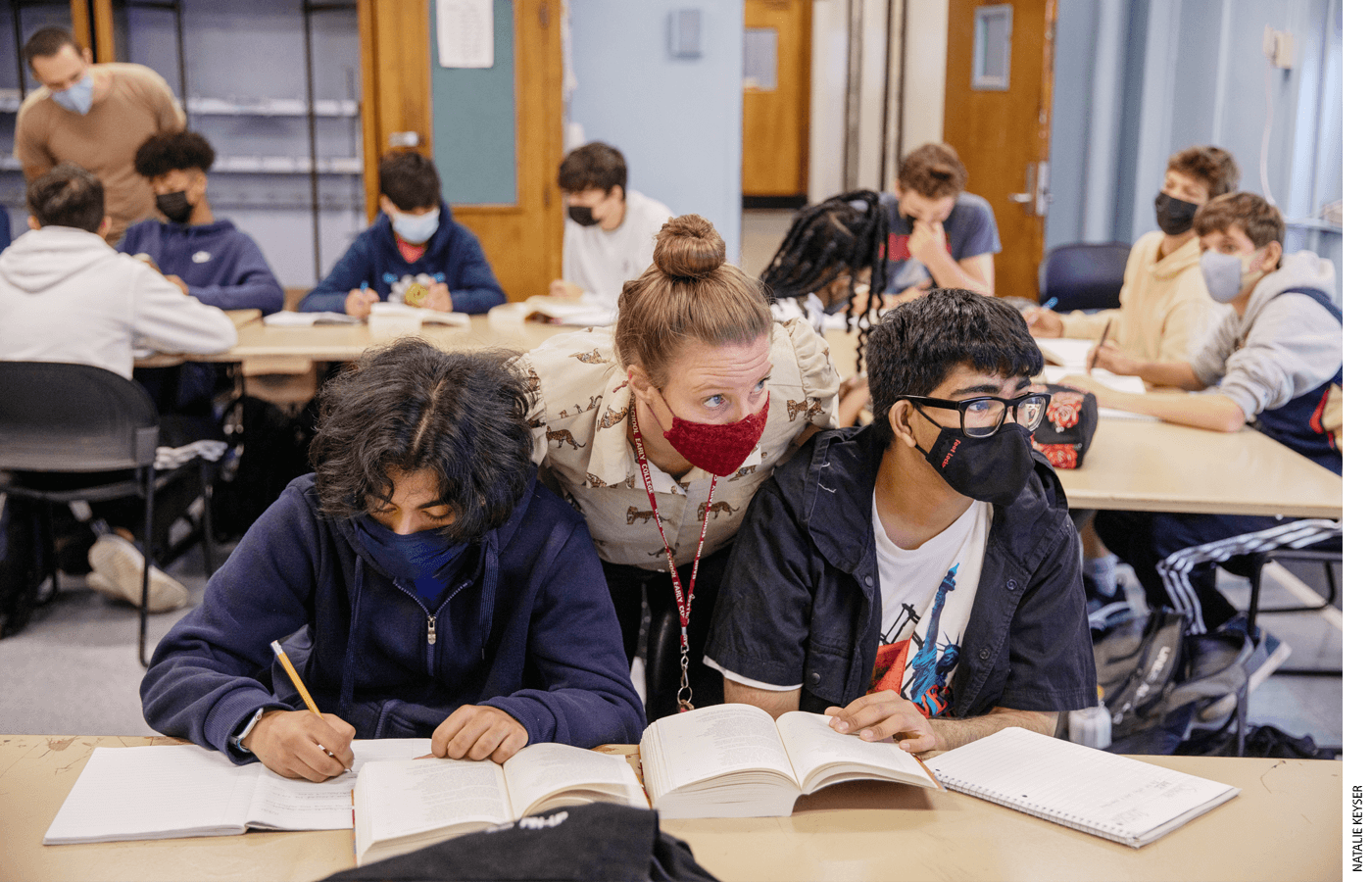
Faculty hold academic ranks within the BHSEC network — Assistant, Associate, and full Professor — with advancement tied to years of service and terminal degree attainment. Faculty receive pre- and in-service training in early college pedagogy, writing instruction, differentiated instruction, and discussion facilitation, and have access to a network research fund supporting scholarly and artistic work. 60% of BHSEC Queens faculty and two-thirds of the broader BHSEC network hold a doctorate or terminal degree.
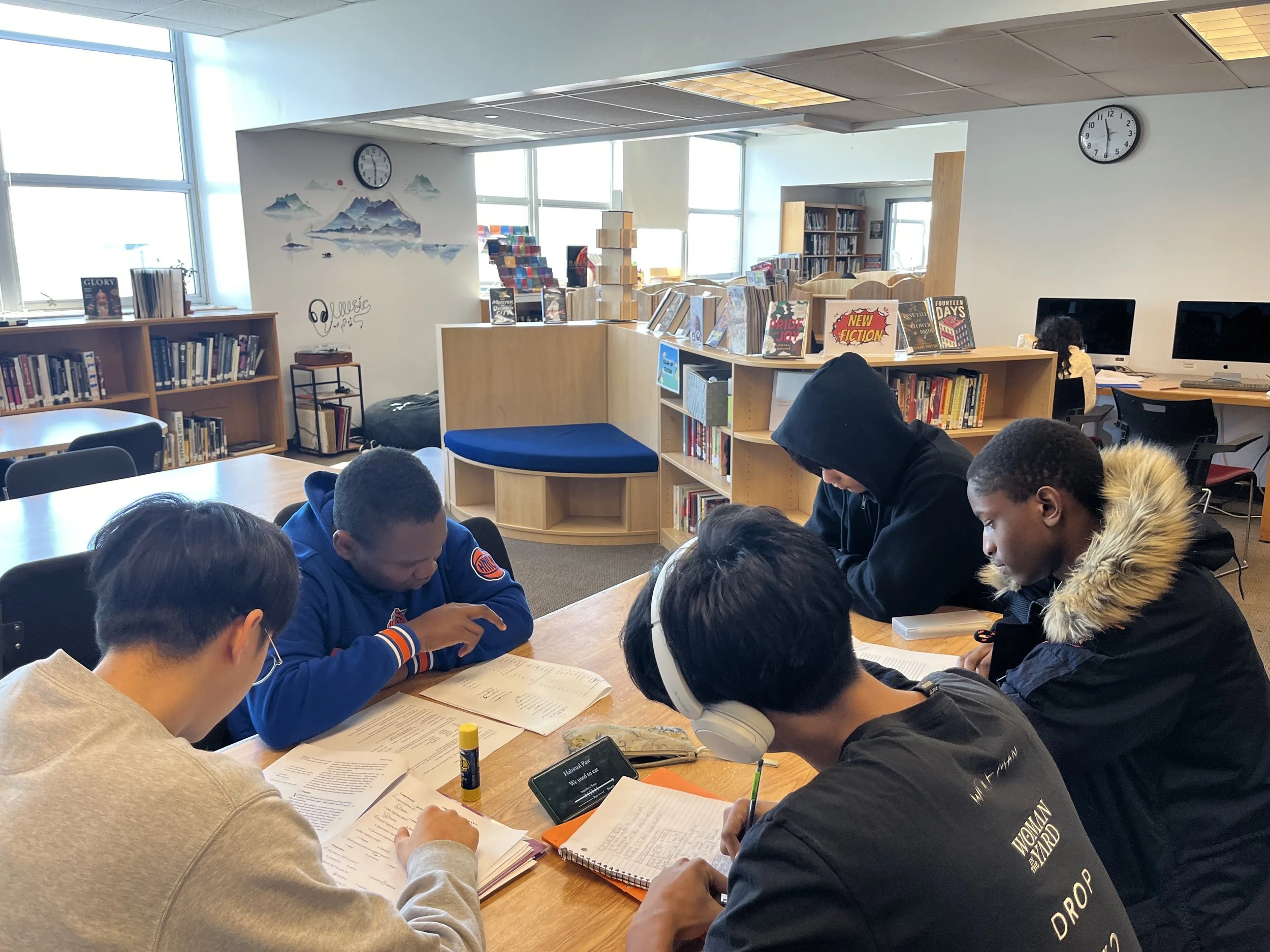
Academic and student supports include a summer Bridge Program for incoming 9th graders, Learning Commons that offers group and individual tutoring across disciplines, a peer tutoring program, and faculty office hours four days per week. All students are assigned a faculty advisor in 9th grade and remain with that advisor through graduation. Beginning in the spring of year three, students work with a College Transfer Office advisor on postsecondary planning, including personal statements, college applications, and credit transfer strategy.
A BHSEC Queens signature program is the Bard Diverse Network of Action (DNA). Funded by the NYSED Smart Transfers grant program, the purpose of Bard DNA is to provide academic support, mentorship, professional and leadership development, and a sense of community to students from historically underrepresented and/or economically disadvantaged backgrounds, during their four years at BHSEC Queens. Bard DNA Fellows participate in the DNA 9th grade summer program; Year 1 summer college course; leadership & skill-development workshops throughout the school year; and mentoring opportunities through the Bard DNA Peer Mentoring Program.
In the Class of 2026, 98.7% of BHSEC Queens students earned a high school diploma and 86.6% earned a Bard College associate's degree, with an average of 61 college credits per graduate. Among the Class of 2025, 89.9% enrolled in a postsecondary institution within six months of graduation, and 90.0% of students from the Class of 2023 who enrolled in a postsecondary institution persisted beyond their first year of college.
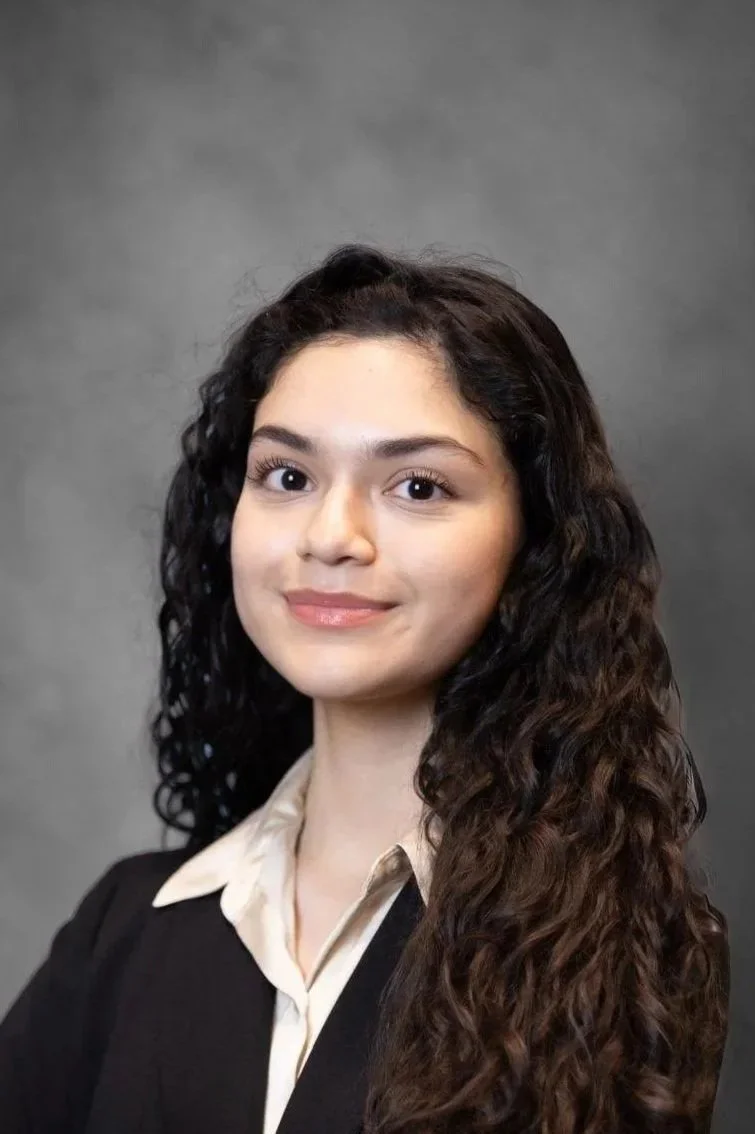
Brianna Abad
BHSEC (2025),
NY4ECP Policy Fellow (2026),
Macaulay Honors College at Hunter College (2029)
“I first heard about the Bard Early Colleges through my cousin, who knew friends who attended and encouraged me to apply to Bard High School Early College Queens (BHSECQ). Applying was one of the best choices I’ve ever made.
Bard Early College believed in me as a fifteen-year-old capable of tackling college-level coursework. I came in eager to push myself academically as a first-generation student, knowing I wanted exposure to a college environment.”
“Something incredibly unique to Bard’s early college model is its Writing and Thinking workshops, a weeklong program during the first days of classes in which students read an anthology of texts centered on a theme in small groups led by a faculty member. It was more than writing: I engaged my friends in discussions about social issues related to the texts while strengthening my critical thinking skills.
By 11th grade (or Year 1), I knew I wanted to cultivate that skill set, which led me to enroll in unique courses, from science fiction and philosophy to a tutorial I proposed on Latin American journalism. At every step, I felt supported by my teachers, the small student-to-faculty ratio, and my advisor, who watched me grow over the four years I was there. In fact, we built such a close relationship that she helped me piece together my personal statement.
Today, I am immensely grateful that all 60 dual-enrollment credits from my time at Bard Early College transferred to the college I attend now. Like many students with a similar background, earning my associate’s degree while in high school relieved a financial burden for my family and opened the door to higher education.
Here is my piece of advice to legislators and advocates championing early college programs: believe in our early college community’s voice. Education policy decisions shouldn’t stop at enrollment numbers. Include students, alumni, faculty, and staff- those who actively shape this model- in the legislative process through meaningful dialogue.
Hear us in our classrooms, lobbies, rallies, universities, and careers we step into next. In doing so, we can expand early college programs across New York State and secure long-term legislative funding to sustain our schools. This is where change begins.”